

Long-term Mentoring that teaches your child how to think, decide, and act independently over time
Mentoring is provided by Sanjeev Manucha, based in California.
Families in Vietnam and other parts of Asia can join.There are no group sessions - each session is online on Zoom and mentoring one-on-one, tailored to your child's needs.
This is not tutoring and it is not therapy.
It is structured mentoring.Your child talks about daily life, school, friends, choices, and challenges.
They learn how to think through situations and develop skills for next steps on their own.
*I also travel to Vietnam at least two times each year for those who prefer to meet occasionally face-to-face.
What This Is
This is a long-term mentoring service for teenagers age 13 and above. It is meant to run over several months or longer and does not work as a short program or a single consultation.
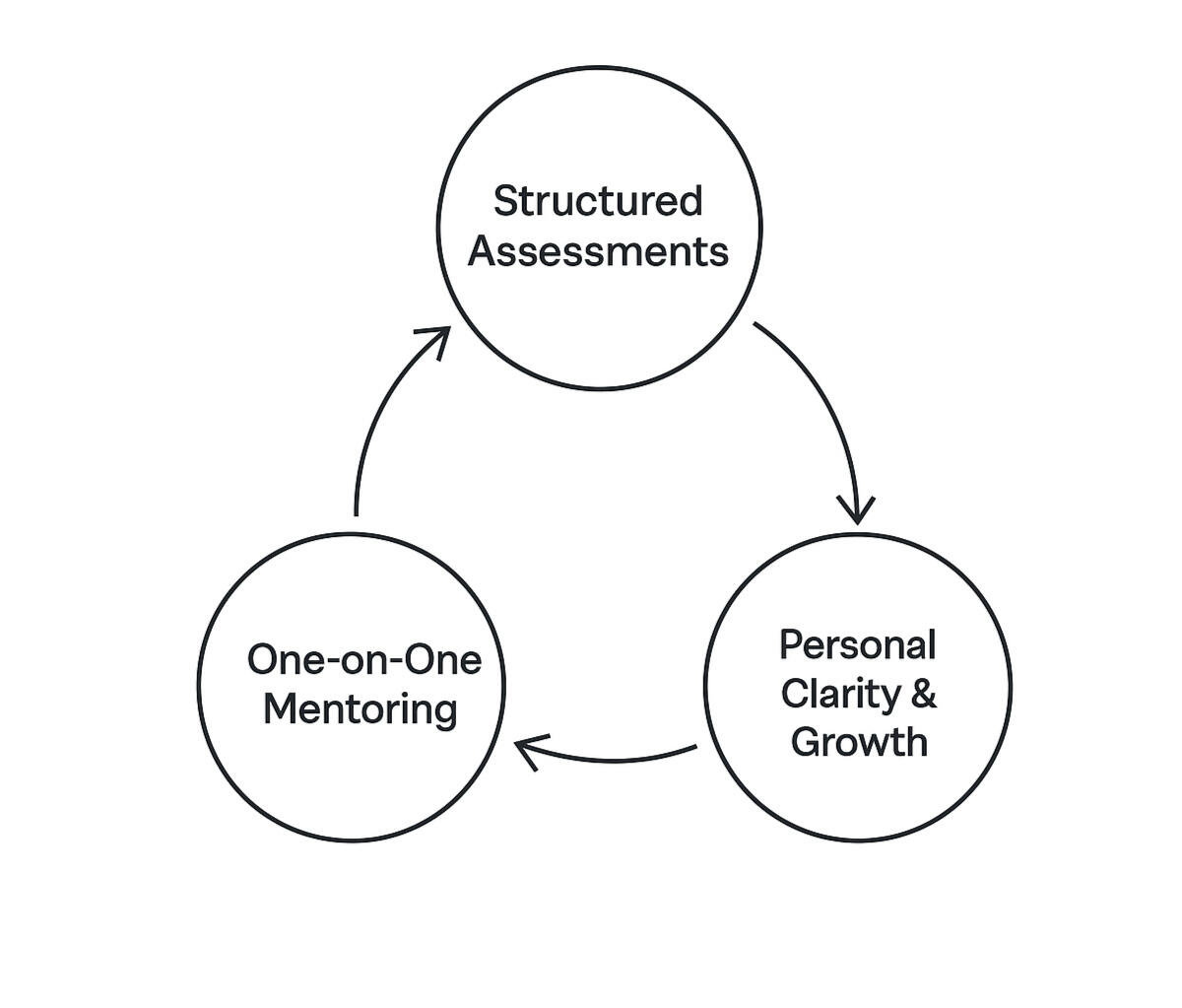
At the start, I conduct a detailed review of your child’s interests, abilities, habits, and current direction in school and life. This review helps identify where your child is doing well and where they feel unsure. This creates a clear and shared starting point for the mentoring.
I then meet your child regularly in one-on-one online sessions.
In these sessions, your child learns how to think through situations, make decisions, and plan next steps.
I guide the thinking process, but I do not make decisions for the child.
This service is not about fixing a child, because your child is not broken. Your child is learning how to become more mature, more stable, and more self-directed over time. Progress comes from practice and repetition, not pressure.
Each student is supported individually by me. There are no group sessions and no junior mentors involved.
Every six months, I update a written summary of your child’s progress, strengths, and direction so parents can clearly see development over time.
Who this is for
This service is for families who care about their child’s long-term development, not only exam results.
Academic performance matters, but it does not prepare a child for all real-life situations.
Teenagers today face more pressure than before. They are expected to handle change, new technology, and unfamiliar environments. School alone does not teach them how to do this.
Many students are asked to think independently, communicate clearly, and make decisions on their own. This is especially true when they study abroad or live away from family. These skills come from practice, guidance, and self-understanding, not from textbooks.
This mentoring helps your child learn how to guide themselves.
They learn how to reflect on situations, correct mistakes, and adjust their behavior over time.
These are practical life skills that support school, work, and personal growth.
If your child spends most of their time speaking Vietnamese or Thai and socializing within a small, familiar group, their view of what is possible can slowly narrow.
This is not a fault. It happens naturally without wider exposure and reflection.
Traveling abroad alone does not solve this.
Being in another country without guidance or engagement does not build independence or clarity.
What matters is learning how to think, adapt, and act responsibly in new settings.
This mentoring is for teenagers who appear fine on the surface but feel uncertain inside. They may be capable but tired, motivated but unsure, or curious but overwhelmed. They are not failing. They are in a transition stage.
If your child is between 13 and 18 and you want steady, long-term support, this service is a good fit.
It offers calm guidance over time so your child can grow confidence, think clearly, and prepare for adult life in a realistic way.
The Process
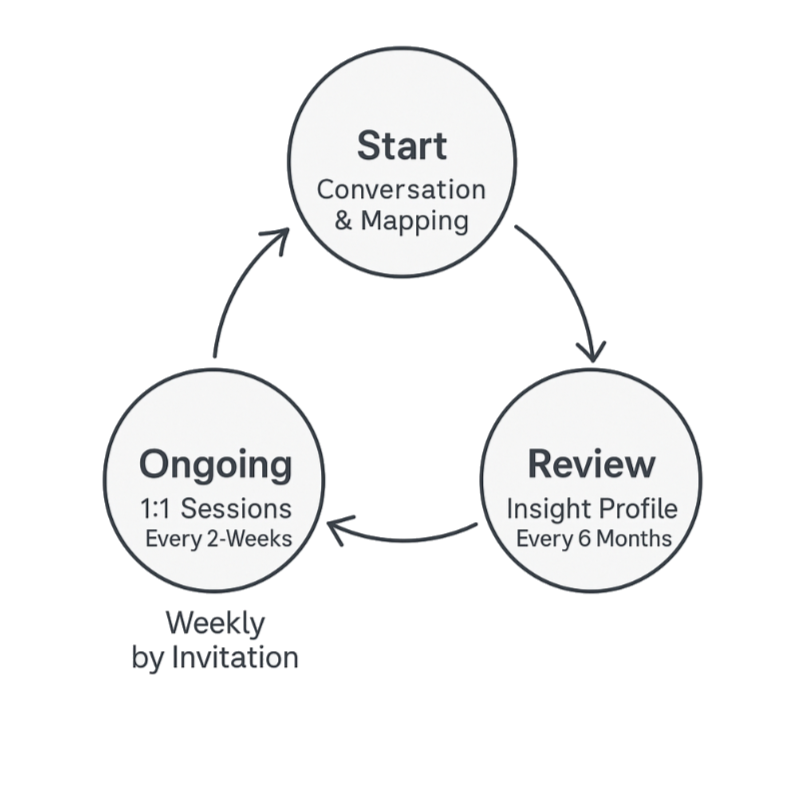
The process starts with a conversation between me, the parent, and the student.
This helps confirm whether the mentoring is a good fit for the child and the family. No commitment is expected before this step.
If we proceed, I begin with an observation phase. I assess your child’s interests, strengths, habits, and current direction using a simple assessment, structured conversations, and guided reflection activities. This information is used to build a clear personal profile for your child.
This personal profile becomes the foundation for the mentoring.
It is not fixed. I update it over time as your child grows, gains clarity, and changes direction.
Mentoring sessions are one-on-one and held online on Zoom.
Most students meet with me once every two weeks. Some students prefer a slower pace based on school load and energy level.
A small number of students move to weekly sessions. This happens only after we have worked together for some time and the student shows readiness for deeper work. Weekly sessions are not offered at the beginning and are not common.
Every six months, I review and update your child’s direction and strengths map. Parents receive a clear written summary that explains how the child’s thinking, decision-making, and maturity are developing. This report focuses on growth, not grades or tasks.
This is a long-term process.
There is no rush and no fixed end date. The purpose is to help your child build internal readiness for real life, step by step.
What you Receive
This mentoring is long-term and personal, but it is not unclear.
As a parent, you will know what is happening and how your child is developing.
You will receive regular updates about your child’s progress.
These updates explain not only what your child is doing, but how they are thinking and changing over time. The focus is on development, not performance.
Every six months, you will receive a written summary of your child’s progress. This summary explains their current strengths, any changes in direction, and areas that need attention. It is written in simple language without technical terms.
These updates help you understand where your child’s energy is going and how they are maturing. They also help you see how to support your child in a calm and indirect way, without pressure.
Parent involvement is an important part of this process. Outside of mentoring sessions, parents often notice changes in behavior, thinking, or mood before anyone else. Your observations matter.For this reason, I schedule regular check-ins with you. These conversations are not about supervising the child. They are about sharing observations and aligning on quiet, supportive actions at home.
At times, I may suggest small, practical actions. This could include encouraging a specific activity, reducing distractions at home, or spending focused one-on-one time together. These are simple suggestions, not requirements.
The mentoring sessions belong to your child. Your role as a parent is to provide steady support around the process. This combination helps the child grow without feeling controlled.
Still have questions? Read the FAQ page!

About the Mentor
My name is Sanjeev Manucha. I am based in California and work with students in Vietnam and other parts of Asia through one-on-one, long-term mentoring.I have mentored teenagers and young adults for more than 15 years. I work with students who think quietly, students who perform well but feel unsure, and students who need a stable adult to talk to regularly. Some students come with clear goals. Others come because they feel stuck.Alongside this work, I have also mentored adults in professional environments. In companies such as Cisco, Salesforce, and Intuit, people often came to me for perspective rather than technical advice. My role was to listen carefully, understand the situation, and respond thoughtfully.This mentoring is built on trust and consistency. I listen closely and speak only when it helps the student think more clearly. I do not rush conversations or push outcomes.I work with a limited number of students at any one time. This allows me to give each student steady attention over a long period.
I do not offer high-volume or short-term programs.I believe every young person benefits from having one adult who is not trying to control them or judge them. Someone who listens, reflects with them, and helps them think independently. That is the role I take with your child.My goal is not to add pressure.
It is to help your child grow into adulthood with clearer thinking, stronger judgment, and steady confidence.
Frequently Asked Questions
1. Is this academic coaching?No. This isn’t tutoring or test prep.
I’m not here to boost grades—I’m here to help your child build clarity, direction, and confidence over time.That said, when a student starts feeling more grounded and motivated, school often improves too.
Not because I’m teaching them math or science—but because they stop wasting energy on doubt, anxiety, or trying to be someone they’re not.When that pressure lifts, focus returns. And performance tends to follow.
2. Does it work just as well over Zoom?Yes.
In fact, this model is designed to work over Zoom.It’s one-on-one, focused, and quiet.
We don’t need a classroom. We need time, attention, and trust.
As long as your child is on a stable connection on a laptop or desktop (not a phone screen), the depth is the same.
3. What kind of students benefit from this?Many students who come to me are doing well in school—but something still feels off.
They might be quiet, easily frustrated, or spending too much time on their phone or gaming.
That doesn’t always mean they’re lazy or distracted. Sometimes it means they’re bored—or ahead of their environment—and no one has noticed.I’ve also worked with students who compare themselves constantly, especially to siblings, and feel like they’ll never measure up.This kind of mentoring helps uncover what’s really going on beneath the surface—and gives the student a way forward that feels personal, honest, and sustainable.It’s not for students in crisis—but it is for those who need more than just advice or academic pressure.
4. How involved are parents in the process?You will be involved—because you see what I can’t.Outside of the sessions I have with your child, the only people who can observe real change are those closest to them. That usually means you—or their close friends.Since I’m answerable to you, and you're the one seeing your child every day, we’ll work together as a team. I’ll schedule regular check-ins with you, separate from the sessions with your child. You will also be able to schedule these sessions with me on your own if needed.These conversations help me understand what (changes) you’re seeing, and also give us space to coordinate quietly in the background. From time to time, I may ask you to support a specific need. For example:
Taking your child to an improv class or a particular play
Creating a screen-free time during dinner for a week
Spending time with your child in a park, etc
These are just examples. The actual requests will always depend on your child’s current stage and what they need most at that time.You’re not expected to supervise or interfere.
You’re there to support—with calm presence and quiet consistency.
5. How do we know if it’s working?This is one-on-one mentoring. Your child isn’t just a student on my calendar—I’m fully invested in their growth, and in the small signs that show it’s happening.But growth doesn’t always look dramatic from the outside. Some shifts are quiet at first: better questions, calmer energy, stronger choices, more awareness, more focus, improved interest in academics.Every six months, I’ll send you a clear summary of what’s changing—inside and out.
Not just what they’re doing, but how they’re thinking and showing up in the world.At the same time, I encourage you to stay realistic. Not every step will be visible right away. And that’s okay.In any case, you and I will be talking.
My parental outreach calendar is always open if you'd like to schedule a check-in.And for smaller updates or questions that don’t need a full meeting, you’re welcome to reach out on Zalo or WhatsApp.
6. What if my child doesn’t want to talk at first?That’s completely okay. In fact, that’s often where we begin.Trust takes time—especially for students who are used to being judged, misunderstood or carrying a quiet self judgement within them. Some think I’m just another adult with more expectations. It can take a few sessions before they realize this space is different.I’ve worked with students who barely spoke at first—and later volunteered to be the opening speaker for their class.
I’ve also seen students break down in tears, finally letting go of stress they didn’t know they were carrying. One sat quietly for ten minutes after crying, then looked up and said, “I want to address the class.”These moments don’t come from pressure. They come from presence.This isn’t school. It’s not therapy. It’s a calm space where your child is allowed to grow in their own way, at their own pace.
7. Can this help with future decisions like university or career?Yes—but not in the checklist sense.I’m not here to tell your child what to study or where to apply.
I’m here to help them understand who they are, what matters to them, and what direction fits their natural strengths and energy.Of course, I’m happy to talk about career coaching when the time is right. But I’ve seen again and again: once a student understands their own interests, aptitudes, and values, the decisions come much more easily—and feel like theirs.This kind of mentoring frees them from needing constant guidance or outside validation.
It’s like planting a seedling in the right soil, at the right time, and supplying it with what it needs to grow strong. Not just now—but for the long term, even when the weather changes.
Get Started
The first step is a conversation.This service is long-term and personal.
It is not a quick program and it is not suitable for every family.If you would like to understand whether this mentoring is right for your child, we can talk.
The purpose of the conversation is to explain the process clearly and see if it fits your child’s needs.There is no obligation after this discussion.
It is simply a way to decide calmly and with full understanding before moving forward.
Investment
This is a premium, one-on-one mentoring service. I work with a small number of students so I can give each child consistent attention over time.Most families work with me for six to twelve months. Sessions are usually held twice a month. This rhythm allows time for reflection, practice, and steady progress.The monthly fee ranges from 400 to 650 USD. The exact amount depends on how often we meet and the level of support needed.
Weekly sessions are limited and offered only when I believe they are appropriate for the student.For younger students, around age 13 to 14, or students who are not facing immediate decisions, a slower rhythm may be suitable.
In these cases, sessions may be scheduled once every three weeks.For older students, age 16 and above, or those approaching important academic or life transitions, meeting more consistently is usually necessary.
This helps build trust and allows meaningful progress within the available time.To begin, the first payment covers the initial two months of mentoring.
After that, payments are made monthly. The final month’s fee is adjusted at the end of the mentoring period.All details are discussed clearly before we begin. You will know the structure, cost, and expectations in advance.
To start, please fill-in the details below and I will respond with sending you a calendar link to schedule a time to talk.We’ll talk for 30–40 minutes, just to get a sense of your child’s context, what they need, and whether this is the right fit.There’s no cost for this first conversation. If it feels like a match, we’ll go from there. If not, no pressure at all.
Thank you - your message has been received
I’ll review it and get in touch with you within 48 hours.If your child is quite young, or if you’re exploring a gentler starting point, we can absolutely talk about a rhythm that works for your family—whether that’s once every three weeks, or something else.We’ll take it one step at a time, together.